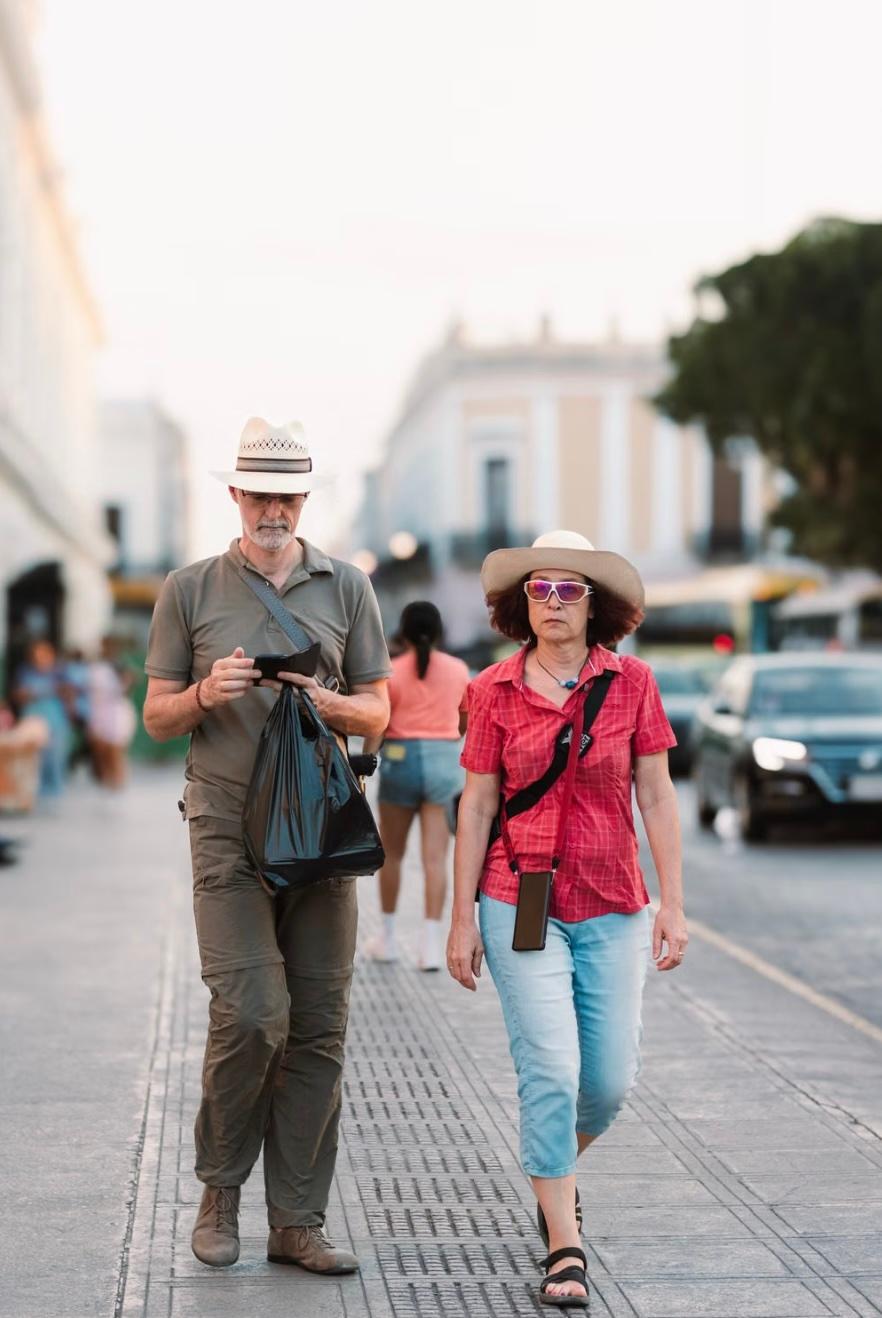
Crossing Borders: When Your Estate Plan Does Not Travel with You
If you travel internationally, you may move fluidly among languages, cultures, and customs.
However, you may not realize that your estate plan will not automatically follow you across
foreign borders. Plans written around US laws may not be recognized or function as intended in
other countries.
An international lifestyle should be paired with an estate plan prepared to function across
borders, time zones, and jurisdictions.
Spotting exposures early, flagging potential risks, and consulting professionals qualified to
address them can all help keep an expected border-crossing from becoming an unexpected
legal barrier.
Mapping Your International Footprint
In the age of globalism, where people, goods, and ideas flow between countries, physical
borders are not as distinct as they once were. Yet the invisible lines separating nations legally
represent different sets of rules that may not be compatible.
You do not need to consider yourself a global citizen or even spend most of your time outside
the US to have an international footprint and cross-border exposure. Your domestic estate plan
may run into a different set of legal and administrative considerations abroad if you fit one or
more of the following profiles:
- Foreign property owner. You own a vacation condo, family villa, inherited land, or other
real estate in a foreign country. That property may be governed by local laws and transfer
procedures that do not align neatly with your US revocable trust or broader estate plan.
- Dual citizen or resident. You hold two passports or claim legal residency in another
country, perhaps through marriage, birth, or ancestral lineage. These benefits may improve
global mobility while also exposing you to overlapping legal jurisdictions and estate rules.
- Offshore account holder. You maintain bank accounts, investment portfolios, or business
interests outside the US that may trigger a distinct set of compliance obligations and transfer
restrictions.
- "Slow-motion" expat. You do not consider yourself an expatriate but spend significant -
and often loosely structured - parts of the year abroad. Retired snowbirds, digital nomads,
and other frequent international travelers may accidentally cross foreign tax or legal
residency thresholds by remaining in another country a few days or weeks too long.
Any of these scenarios can introduce another legal or administrative layer into your estate
planning. The earlier you identify your international footprint, the more time your attorney has to
determine where domestic planning stops - and additional cross-border guidance - must begin.
When Domestic Planning Stops at the Border
You may assume that estate planning documents such as a will, trust, power of attorney, or
healthcare directive that work at home will work the same way wherever you travel or own
assets. But that thinking can leave you exposed.
A document that is valid at home may be difficult to use or unworkable abroad - rejected by a
foreign institution, treated differently under local law, or requiring lengthy legal procedures to be
recognized.
Domestic planning limitations can be seen in the following common assumptions that clash with
international reality:
- "My power of attorney is universally recognized." A foreign bank, property registry, or
local institution may refuse or delay acceptance of a US power of attorney. Recognizing an
agent's authority abroad may require formal translation, local notarization, or additional
locally compliant documentation.
- "My US will controls all my property." Real estate abroad may be subject to local
succession and transfer rules that override the instructions in your US-based will. Some
countries also have forced-heirship laws that reserve a portion of an estate for certain heirs
and limit how freely the property can pass.
- "My revocable trust avoids probate everywhere." The concept of a trust is foreign to
many civil law nations, and its legal treatment can differ significantly across jurisdictions.
Foreign tax and legal authorities may characterize the trust's income or beneficiaries
differently - or decline to honor its intended tax, succession, or probate-avoidance effects.
- "My healthcare directive will speak for me." A hospital abroad may not immediately
recognize your US healthcare proxy, particularly if it is untranslated, unfamiliar, or
inconsistent with local medical consent rules.
- "My beneficiary designation settles the matter." Foreign retirement accounts, insurance
policies, or investment products may follow localized transfer rules. A designation based on
US assumptions may not produce the result you expect.
- "My chosen fiduciary can step in." A US-based executor or trustee trying to manage your
foreign asset from afar may face institutional resistance, local residency rules, and logistical
logjams.
These examples are not exhaustive, and they do not necessarily mean that every domestic
document becomes useless once it crosses an international border. The point is that validity,
recognition, and usability can create different risks and exposures. Even a plan that technically
holds up under varying legal standards can become harder, slower, and more expensive to
administer.
Connecting Flights, Connecting Dots, and Connecting Legal Guidance
A revocable living trust that works seamlessly in Arizona may be unrecognizable in France. A
power of attorney drafted in English and notarized in Virginia may be unenforceable at a bank in
Mexico. A will that distributes property equally among your children may violate forced-heirship
laws in Italy, Spain, or Japan - countries where the law dictates who inherits, regardless of what
your documents say.
If you own foreign real estate, hold accounts with overseas institutions, maintain business
interests abroad, or split your time between countries, your domestic estate plan alone is not
enough. The documents, structures, and assumptions that protect your family here may create
gaps - or outright conflicts - in another jurisdiction.
Cross-border planning may require additional legal steps, translated or authenticated
documents, and help from attorneys, tax professionals, or other specialists in the host country.
Those extra layers can add time and expense, making them the estate planning equivalent of a
missed flight.
What cross-border coordination looks like in practice: identifying which of your assets are
governed by foreign law and what that law requires; working with local counsel in the relevant
country to ensure that your documents are recognized, properly translated, and authenticated;
structuring ownership and succession to comply with both US and foreign legal systems; and
coordinating with international tax professionals on reporting obligations that US citizens carry
regardless of where their assets sit.
You may cross borders easily, but your estate plan may not. While we cannot make customs
and border crossings entirely smooth or stress-free, we can act as your international legal
liaison, identifying disconnects between your domestic estate plan and foreign destinations
ahead of your arrival.
MEREDITH | PC
4325 Windsor Centre Trail
Suite 400
Flower Mound Texas 75028
214-513-1013
This newsletter is for informational purposes only and is not intended to be construed as written advice about a Federal tax matter. Readers should consult with their own professional Counselors to evaluate or pursue tax, accounting, financial, or legal planning strategies.
You have received this newsletter because I believe you will find its content valuable. Please feel free to Contact Me if you have any questions about this or any matters relating to estate planning.
